
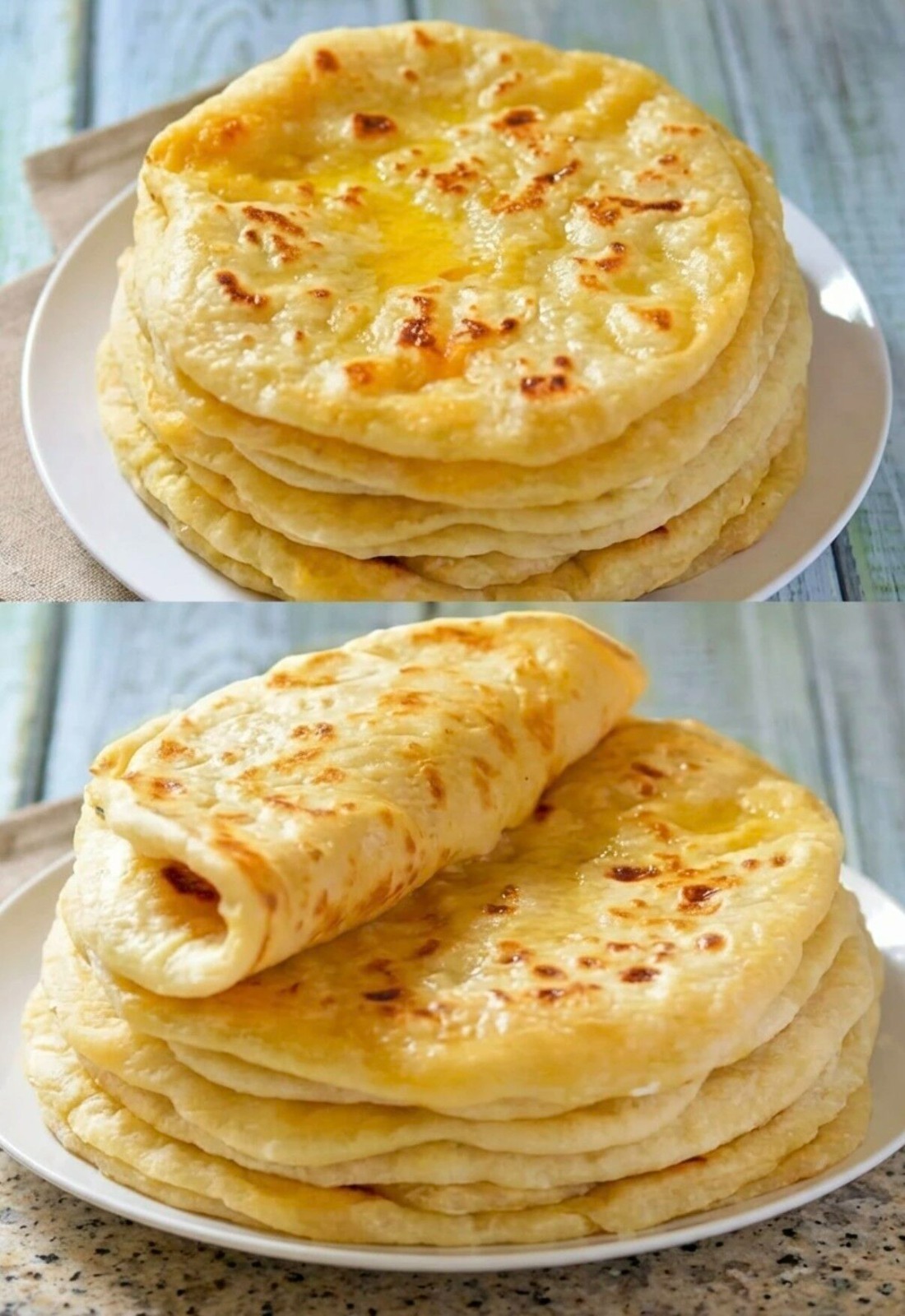
Soft, Pillowy, and Incredibly Easy
There’s something irresistible about freshly baked bread—especially when it’s warm, golden, and unbelievably soft. This Fluffy Turkish Bread, known as Bazlama, is the kind of recipe that feels like magic. With a tender, airy interior and a lightly blistered, golden exterior, it’s the perfect bread for dipping, wrapping, or simply enjoying on its own.
What makes this recipe stand out is how simple it is. No complicated techniques, no fancy equipment—just a handful of everyday ingredients and about an hour of your time. Whether you’re new to bread-making or a seasoned baker, this foolproof bazlama recipe delivers incredible results every time.
Why This Bazlama Recipe Works
This bread has become a staple in many kitchens for good reason. It’s soft, versatile, and surprisingly easy to make.
The combination of warm milk and olive oil creates a rich, tender crumb that stays soft even after cooling. The high-heat baking method helps the dough puff up beautifully, giving you that signature pillowy texture. And because the process is simple and forgiving, it’s perfect for beginners.
You also don’t need any special tools—just a bowl, a rolling pin, and an oven. Plus, it’s incredibly versatile. You can serve it with savory dishes, dips, or even sweet toppings like honey and butter.
Ingredients You’ll Need
For the Dough:
- 4 cups all-purpose flour (about 500g), plus extra for dusting
- 2 teaspoons salt
- 2 teaspoons sugar
- 2 teaspoons instant yeast (or active dry yeast)
- 1½ cups warm milk (about 110°F / 45°C)
- ¼ cup warm water
- ¼ cup olive oil (plus more for brushing)
Optional Toppings:
- Nigella seeds (traditional)
- Sesame seeds
- Flaky sea salt
- Fresh or dried herbs
How to Make Fluffy Turkish Bread (Bazlama)
Step 1: Activate the Yeast
If using active dry yeast, mix it with warm water and a pinch of sugar. Let it sit for 5–10 minutes until foamy. If using instant yeast, you can skip this step.
Step 2: Mix the Dough
In a large bowl, combine flour, salt, sugar, and yeast. Add warm milk, olive oil, and water, then mix until a rough dough forms.
Step 3: Knead
Knead the dough for 8–10 minutes by hand (or 5–7 minutes using a mixer) until smooth and elastic. The dough should feel soft and slightly tacky.
Step 4: First Rise
Place the dough in a lightly oiled bowl, cover, and let it rise in a warm place until doubled in size, about 1 to 1½ hours.
Step 5: Divide and Rest
Punch down the dough and divide it into 6–8 pieces (or 4 larger ones). Shape into balls, cover, and let rest for 10–15 minutes.
Step 6: Roll Out
Roll each piece into a round about ½-inch thick. Avoid rolling too thin to ensure a good puff.
Step 7: Second Rise
Place the rounds on a lined baking sheet, cover lightly, and let them rise again for 20–30 minutes.
Step 8: Preheat the Oven
Preheat your oven to 475°F (245°C). If you have a pizza stone or baking steel, place it inside to heat.
Step 9: Bake
Transfer the dough rounds to the hot surface and bake for 5–7 minutes until puffed and lightly golden.
Step 10: Finish and Serve
Remove from the oven and brush immediately with olive oil. Add your favorite toppings and serve warm.
Pro Tips for Perfect Bazlama
Getting bakery-quality results at home is easy with a few key tips.
Warm milk is essential—it helps activate the yeast and creates a soft texture. Make sure it’s not too hot or too cold. Proper kneading is also important, as it develops gluten and gives the bread structure.
Roll the dough evenly so it puffs up uniformly, and always bake in a very hot oven. That high heat creates steam quickly, which is what gives the bread its signature rise.
If baking in batches, keep the remaining dough covered to prevent it from drying out.
Delicious Variations to Try
One of the best things about bazlama is how customizable it is.
You can add garlic and herbs directly into the dough for extra flavor, or brush the finished bread with olive oil and sprinkle with za’atar for a classic Middle Eastern twist.
For a more indulgent version, try stuffing the dough with cheese before baking. Mozzarella or feta works beautifully. You can also swap half the flour for whole wheat to make a heartier version, or add spices like cumin and black pepper for a deeper flavor.
What to Serve with Turkish Bread
This bread pairs perfectly with a wide range of dishes.
Serve it with olive oil and spices for a simple appetizer, or use it to scoop up dips like hummus, baba ganoush, or tzatziki. It’s also ideal alongside grilled meats, kebabs, soups, and stews.
For a quick breakfast or snack, spread it with butter and drizzle with honey. Add some cheese and olives, and you’ve got a simple yet satisfying meal.
Storage and Reheating Tips
Bazlama is best enjoyed fresh, but it stores well too.
Keep it at room temperature in an airtight container for up to two days. To freeze, wrap the cooled bread tightly and store for up to three months.
To reheat, wrap in foil and warm in the oven at 350°F for a few minutes, or heat in a skillet for a quick refresh. Avoid the microwave, as it can make the bread tough.
Frequently Asked Questions
Can I make this without a stand mixer?
Yes, absolutely. Kneading by hand works perfectly and only takes about 10 minutes.
Can I use bread flour instead of all-purpose?
Yes. Bread flour will give the bread a slightly chewier texture.
Why didn’t my bread puff up?
This usually happens if the oven isn’t hot enough, the dough is over-proofed, or it was rolled too thin.
Can I cook bazlama in a skillet instead of the oven?
Yes, and it’s actually traditional. Cook each round in a hot, dry skillet for 2–3 minutes per side until puffed and golden.
What’s the difference between bazlama and pide?
Bazlama is a thick, round flatbread often cooked on a griddle, while pide is typically oval-shaped and can be topped or stuffed.
Final Thoughts
If you’ve ever wanted to make homemade bread but felt intimidated, this fluffy Turkish bazlama is the perfect place to start. It’s simple, quick, and incredibly rewarding. Once you try it, it’s likely to become a regular part of your kitchen routine.
Soft, warm, and endlessly versatile, this bread isn’t just a side—it’s the star of the table.