
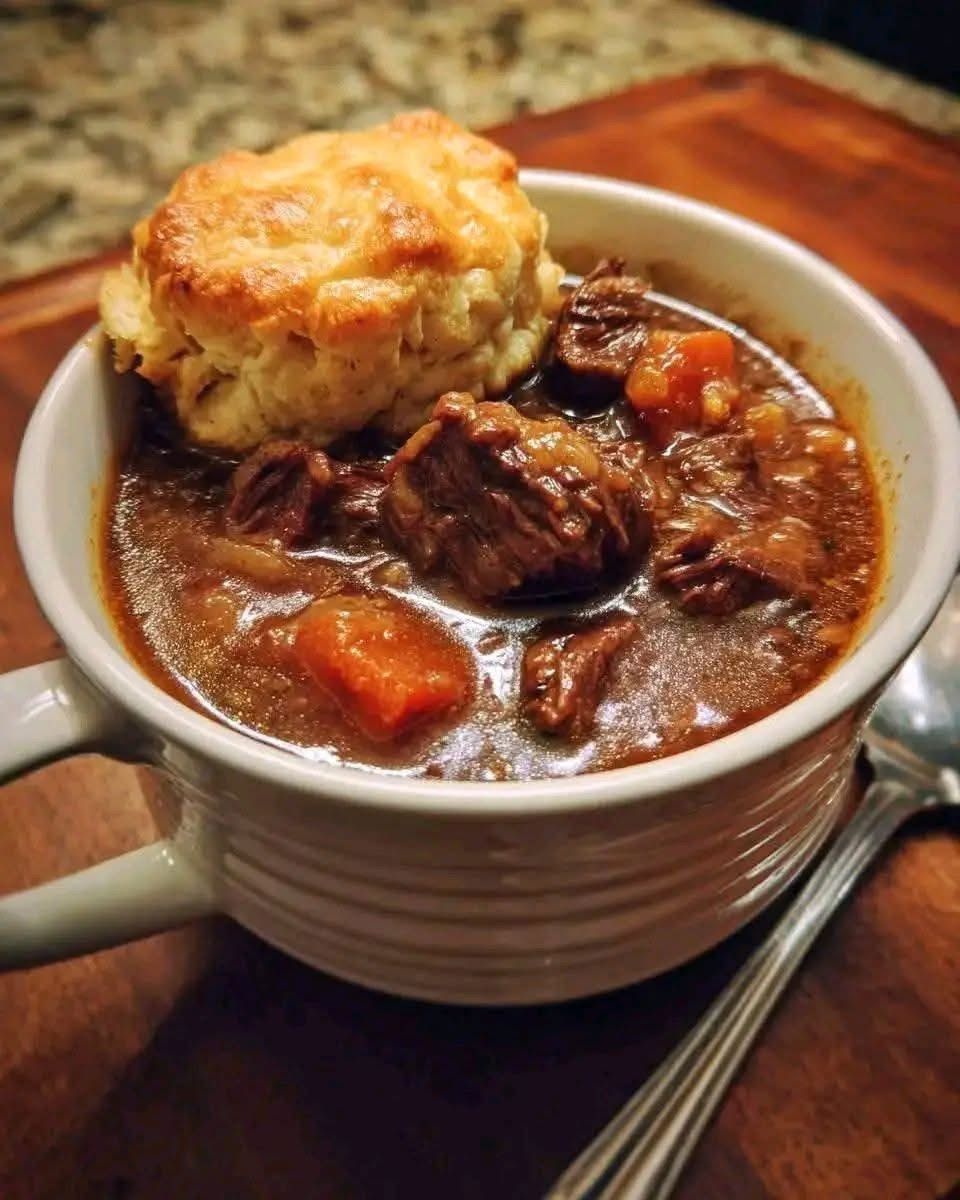
Rich, Savory, and Packed with Deep Caramelized Onion Flavor
When we combine the deep sweetness of slow-caramelized onions with tender, slow-braised beef, the result is a French Onion Beef Stew that delivers bold, layered flavor in every spoonful. This dish captures the soul of classic French onion soup and transforms it into a hearty, rustic beef stew designed for comforting dinners and impressive gatherings alike.
In this guide, we present a meticulously crafted, flavor-forward recipe that ensures perfect texture, profound richness, and a velvety finish worthy of any table.
Why French Onion Beef Stew Is the Ultimate Comfort Dish
French Onion Beef Stew stands apart because of its complex flavor structure:
- Deep caramelization creates natural sweetness
- Dry red wine adds acidity and body
- Beef broth and Worcestershire sauce intensify umami
- Gruyère cheese topping provides creamy, nutty depth
Every ingredient works together to build a stew that is both luxuriously rich and perfectly balanced.
Ingredients for Authentic French Onion Beef Stew (Serves 4–6)
For the Stew
- 800g (1.7 lbs) beef stew meat, cut into 1–2 inch cubes
- Salt and freshly ground black pepper, to taste
- 2–3 tablespoons olive oil
- 4 large onions, thinly sliced
- 3 garlic cloves, minced
- 2 tablespoons all-purpose flour
- 1 cup (240ml) dry red wine
- 4 cups (1 liter) high-quality beef broth
- 2 teaspoons fresh thyme (or 1 teaspoon dried thyme)
- 1 bay leaf
- 2 carrots, sliced
- 2 celery stalks, sliced
- 1 tablespoon Worcestershire sauce
Optional Classic French Onion Topping
- 4 slices baguette, toasted
- 1 cup grated Gruyère or Swiss cheese
Step-by-Step Guide to Making French Onion Beef Stew
1. Brown the Beef for Maximum Flavor
We begin by seasoning the beef generously with salt and black pepper. Proper seasoning at this stage ensures that every bite is deeply flavorful.
Heat olive oil in a heavy-bottomed pot or Dutch oven over medium-high heat. Sear the beef in batches, allowing each cube to develop a dark golden crust. Avoid overcrowding the pan; browning requires space to create that essential caramelized exterior.
Remove the beef and set aside. The browned bits left in the pot are concentrated flavor and will enrich the stew later.
2. Slow-Caramelize the Onions for Deep Sweetness
In the same pot, add the sliced onions and a small pinch of salt. Cook over medium heat, stirring occasionally, for 25–30 minutes.
The onions should transform from pale and firm to deep golden brown, soft, and intensely aromatic. Proper caramelization is the foundation of authentic French onion flavor. The sugars in the onions gradually develop complexity, producing a rich sweetness that balances the savory beef.
Add minced garlic and cook for one additional minute to release its fragrance.
3. Build the Stew’s Rich Base
Sprinkle the all-purpose flour over the caramelized onions. Stir continuously for 1–2 minutes to cook out the raw flour taste. This step creates a subtle thickening agent that will give the stew a luxurious texture.
Deglaze the pot with dry red wine, scraping the bottom to release the browned bits. The wine reduces slightly, concentrating its flavor and adding depth.
Return the browned beef to the pot. Add:
- Beef broth
- Thyme
- Bay leaf
- Carrots
- Celery
- Worcestershire sauce
Stir to combine.
4. Simmer Slowly for Fork-Tender Beef
Bring the stew to a gentle boil, then reduce the heat to low. Cover and simmer for 2–3 hours.
During this slow cooking process:
- The beef becomes fork-tender
- The broth thickens naturally
- The flavors meld into a unified, deeply savory profile
If needed, remove the lid during the last 30 minutes to reduce and thicken further.
Optional Broiled Gruyère Topping for Authentic Finish
For a traditional French onion presentation, preheat the oven broiler.
Ladle the stew into oven-safe bowls. Place a toasted baguette slice on top of each portion and sprinkle generously with grated Gruyère cheese.
Broil until the cheese is melted, bubbling, and lightly browned. The cheese forms a rich, creamy crust that enhances the stew’s savory complexity.
Expert Techniques for Superior Flavor
Use the Right Cut of Beef
Choose well-marbled cuts such as chuck roast or blade steak. These cuts break down beautifully during slow cooking, resulting in tender meat and a richer broth.
Select a Balanced Red Wine
A dry red wine such as Cabernet Sauvignon or Merlot provides structure without overpowering the dish. The acidity brightens the stew and enhances the caramelized onion sweetness.
Caramelize Onions Patiently
Never rush this step. Proper caramelization requires moderate heat and time. The darker the onions (without burning), the deeper and sweeter the final flavor.
Enhance Depth with Fresh Herbs
Fresh thyme offers a cleaner, more vibrant aroma than dried thyme. Adding a sprig during simmering elevates the stew’s fragrance.
How to Adjust Thickness and Flavor
- For a thicker stew, simmer uncovered until reduced.
- For a lighter broth, add a splash of additional beef stock.
- For enhanced richness, stir in a small knob of butter at the end.
Season gradually and taste throughout the cooking process to maintain balance.
Serving Suggestions for French Onion Beef Stew
French Onion Beef Stew pairs beautifully with:
- Crusty artisan bread
- Creamy mashed potatoes
- Buttered egg noodles
- A simple green salad with vinaigrette
The stew’s richness contrasts perfectly with fresh, crisp side dishes.
Make-Ahead and Storage Tips
This stew tastes even better the next day. To prepare in advance:
- Cool completely before refrigerating.
- Store in an airtight container for up to 4 days.
- Freeze for up to 3 months.
Reheat gently over low heat to preserve tenderness.
For deeper flavor, caramelize the onions a day ahead and refrigerate. This allows their sweetness to intensify before building the stew.
Nutritional Highlights
French Onion Beef Stew provides:
- High-quality protein from beef
- Essential minerals such as iron and zinc
- Fiber and vitamins from carrots, celery, and onions
When prepared with care and balanced portions, it becomes a nourishing and satisfying meal.
Common Mistakes to Avoid
- Overcrowding the pan while browning beef
- Under-caramelizing onions
- Boiling aggressively instead of gentle simmering
- Skipping deglazing
Attention to detail transforms this dish from ordinary to extraordinary.
Why This French Onion Beef Stew Recipe Stands Out
This recipe achieves the perfect harmony between sweet caramelized onions, robust beef flavor, and silky, wine-infused broth. The optional Gruyère topping adds a luxurious finish reminiscent of classic French onion soup while preserving the heartiness of a traditional beef stew.
The result is a dish that is:
- Intensely flavorful
- Comfortingly rich
- Elegant enough for entertaining
- Simple enough for weeknight preparation
Every spoonful delivers layered depth and warmth.
Conclusion: The Ultimate Rich and Savory French Onion Beef Stew
French Onion Beef Stew is more than a meal—it is a celebration of slow cooking and bold flavor development. By patiently caramelizing onions, carefully browning beef, and simmering gently, we create a stew that embodies richness, comfort, and authenticity.
Serve it steaming hot, topped with bubbling Gruyère and crusty baguette, and experience a dish that captures everything we love about classic French cuisine—deep, savory, and utterly satisfying.