
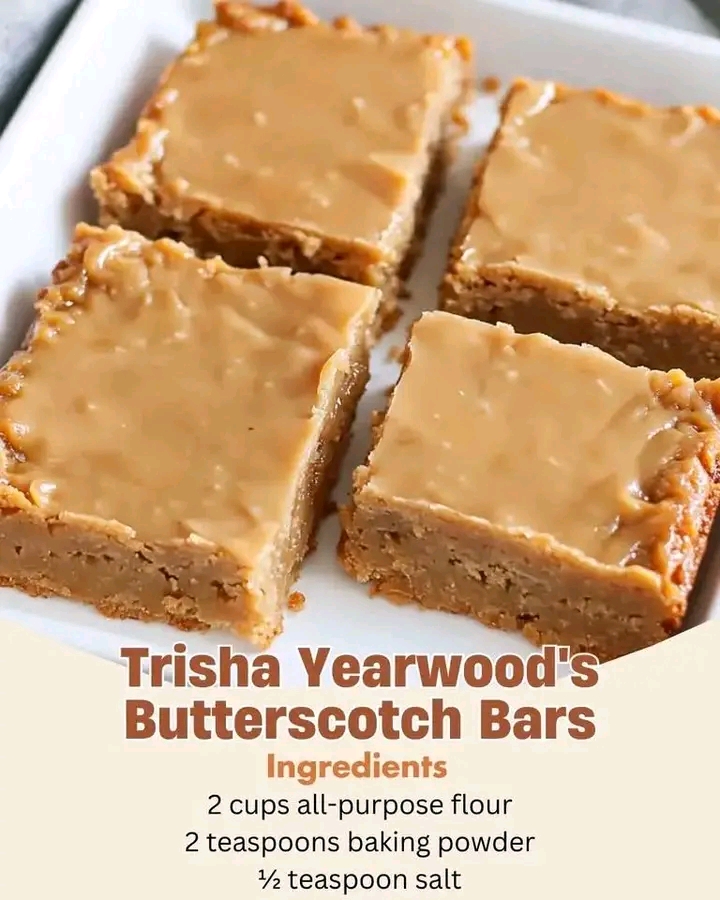
Trisha Yearwood’s Butterscotch Bars
A Rich, Old-Fashioned Dessert with Deep Brown Sugar Flavor
Trisha Yearwood’s Butterscotch Bars are the kind of dessert that feels instantly familiar, like something pulled from a handwritten recipe card tucked into a well-used kitchen drawer. Rich with brown sugar, buttery to the core, and perfectly chewy with lightly crisp edges, these bars are a celebration of simple ingredients done right. They are not flashy or complicated, but they deliver something far more valuable: comfort, reliability, and irresistible flavor.
These bars belong to a tradition of Southern baking where desserts are meant to be shared, sliced generously, and enjoyed with a cup of coffee or a glass of cold milk. Butterscotch bars, in particular, rely on the deep caramel notes of brown sugar rather than chocolate or fruit, giving them a warm, almost toffee-like flavor that feels cozy and indulgent. Trisha Yearwood’s version stays true to that classic spirit, using pantry staples and straightforward techniques to produce a dessert that works just as well for a casual family gathering as it does for a bake sale or holiday table.
What makes this recipe especially appealing is its balance. The bars are rich without being heavy, sweet without being cloying, and soft without falling apart. Melted butter creates a dense, moist crumb, while baking powder provides just enough lift to keep the texture tender. The result is a bar that slices cleanly, travels well, and keeps beautifully for days, making it an ideal make-ahead dessert.
Why These Butterscotch Bars Are a Classic
Butterscotch-flavored desserts have a long history in American baking, especially in home kitchens where brown sugar was a staple ingredient. Unlike chocolate-based desserts, which can dominate the palate, butterscotch offers a subtler sweetness built on caramelized sugar and butter. This makes these bars incredibly versatile and appealing to a wide range of tastes.
Trisha Yearwood’s Butterscotch Bars stand out because they lean into that simplicity rather than trying to reinvent it. There is no complicated layering, no frosting that overwhelms the base, and no need for specialty ingredients. Everything about this recipe is approachable, from the mixing method to the baking time, which is why it has remained popular with home bakers.
Another reason these bars endure is their texture. They are soft and chewy in the center, with slightly firmer edges that add contrast. That balance makes each bite satisfying and keeps the bars from feeling monotonous. Whether served warm or at room temperature, they deliver consistent results every time.
Ingredients Overview
Each ingredient in this recipe plays a clear and important role. Understanding how they work together helps ensure success and allows for thoughtful variations if desired.
Flour
All-purpose flour provides the structure for the bars. It gives them enough strength to hold their shape while still allowing for a tender crumb.
Baking Powder
Baking powder adds gentle lift, preventing the bars from becoming too dense. It works with the melted butter to create a soft, even texture throughout.
Salt
Salt balances the sweetness of the brown sugar and enhances the butterscotch flavor. Even a small amount makes a noticeable difference in the final taste.
Butter
Unsalted butter is melted rather than creamed, which contributes to the bars’ moist, chewy texture. Using unsalted butter allows better control over the overall salt level.
Brown Sugar
Brown sugar is the heart of this recipe. Its molasses content gives the bars their deep caramel flavor and contributes to their moist, chewy consistency. Packed brown sugar ensures accurate measurement and consistent results.
Ingredients List
- 2 cups all-purpose flour
- 2 teaspoons baking powder
- 1/2 teaspoon salt
- 1 cup unsalted butter, melted
- 2 cups packed brown sugar
- Eggs
- Vanilla extract
- Optional additions such as chopped nuts or butterscotch chips
While the base recipe is simple, optional mix-ins can be added to suit personal preference without compromising the integrity of the bars.
Preparing the Baking Pan and Oven
Before mixing the batter, preheat your oven to the recommended temperature. Preparing the pan properly is just as important as mixing the ingredients. Line a baking dish with parchment paper or lightly grease it to prevent sticking and make removal easier.
Using parchment paper with overhanging edges allows you to lift the entire slab of bars out of the pan once they have cooled, making slicing neat and effortless.
Mixing the Dry Ingredients
In a medium bowl, whisk together the flour, baking powder, and salt. This step ensures that the leavening and salt are evenly distributed throughout the flour, which helps the bars bake evenly and rise properly.
Set the dry ingredients aside while you prepare the wet mixture.
Making the Butterscotch Batter
In a large bowl, combine the melted butter and packed brown sugar. Stir until smooth and glossy. This mixture should look thick and cohesive, with no dry pockets of sugar remaining.
Add the eggs one at a time, mixing well after each addition. This allows the eggs to emulsify properly into the butter and sugar, creating a smooth batter. Stir in the vanilla extract, which adds warmth and depth to the butterscotch flavor.
Gradually add the dry ingredients to the wet ingredients, mixing just until combined. Avoid overmixing, as this can develop too much gluten and result in a tougher texture. The batter will be thick but spreadable.
If you are adding any optional mix-ins, fold them in gently at this stage.
Baking the Bars
Spread the batter evenly into the prepared baking pan, smoothing the top with a spatula. Make sure the batter reaches all corners of the pan to ensure even thickness.
Bake until the bars are set in the center and lightly golden around the edges. A toothpick inserted into the center should come out with a few moist crumbs but no wet batter. This indicates perfectly baked bars that will remain soft and chewy once cooled.
Cooling and Slicing
Allow the bars to cool completely in the pan before slicing. This cooling time is essential, as it allows the structure to set and the flavors to develop fully. Cutting too soon can cause the bars to crumble or lose their shape.
Once cooled, lift the bars out of the pan using the parchment paper and slice into squares or rectangles, depending on your preference.
Serving Suggestions
Trisha Yearwood’s Butterscotch Bars are delicious on their own, but they can also be dressed up if desired. Serve them slightly warm with a scoop of vanilla ice cream for an easy dessert, or drizzle with a simple glaze for added sweetness.
They pair beautifully with coffee or tea and make a wonderful addition to dessert tables, potlucks, and holiday cookie trays.
Storage and Make-Ahead Tips
These bars store exceptionally well. Keep them in an airtight container at room temperature for several days, or refrigerate them for longer storage. Their flavor often deepens after the first day, making them even more enjoyable.
They can also be frozen. Wrap individual bars tightly and freeze for up to three months. Thaw at room temperature before serving.
Variations and Customizations
This recipe is a great base for customization. Chopped pecans or walnuts add crunch and complement the butterscotch flavor. Butterscotch chips intensify the caramel notes, while a light sprinkle of sea salt on top enhances the sweetness.
For a slightly richer version, a small amount of cream can be added to the batter. For a lighter texture, reduce the butter slightly and increase the baking powder by a small amount.
Why This Recipe Works for a Website
Trisha Yearwood’s Butterscotch Bars are exactly the kind of recipe readers look for online. They are approachable, nostalgic, and made with ingredients most people already have on hand. The instructions are straightforward, the results are reliable, and the finished dessert appeals to a wide audience.
This recipe performs well as a family-friendly dessert, a holiday treat, or a bake-sale favorite. It invites readers to bake, share, and return for more, which is exactly what makes a recipe successful on a website.
Final Thoughts
Trisha Yearwood’s Butterscotch Bars prove that great desserts do not need to be complicated. With butter, brown sugar, and a handful of pantry staples, this recipe creates something deeply satisfying and endlessly comforting.
These bars are rich without being overwhelming, simple without being boring, and nostalgic without feeling outdated. Whether you are baking them for loved ones or enjoying them yourself, they offer a reminder of why classic recipes continue to hold such a special place in our kitchens.