
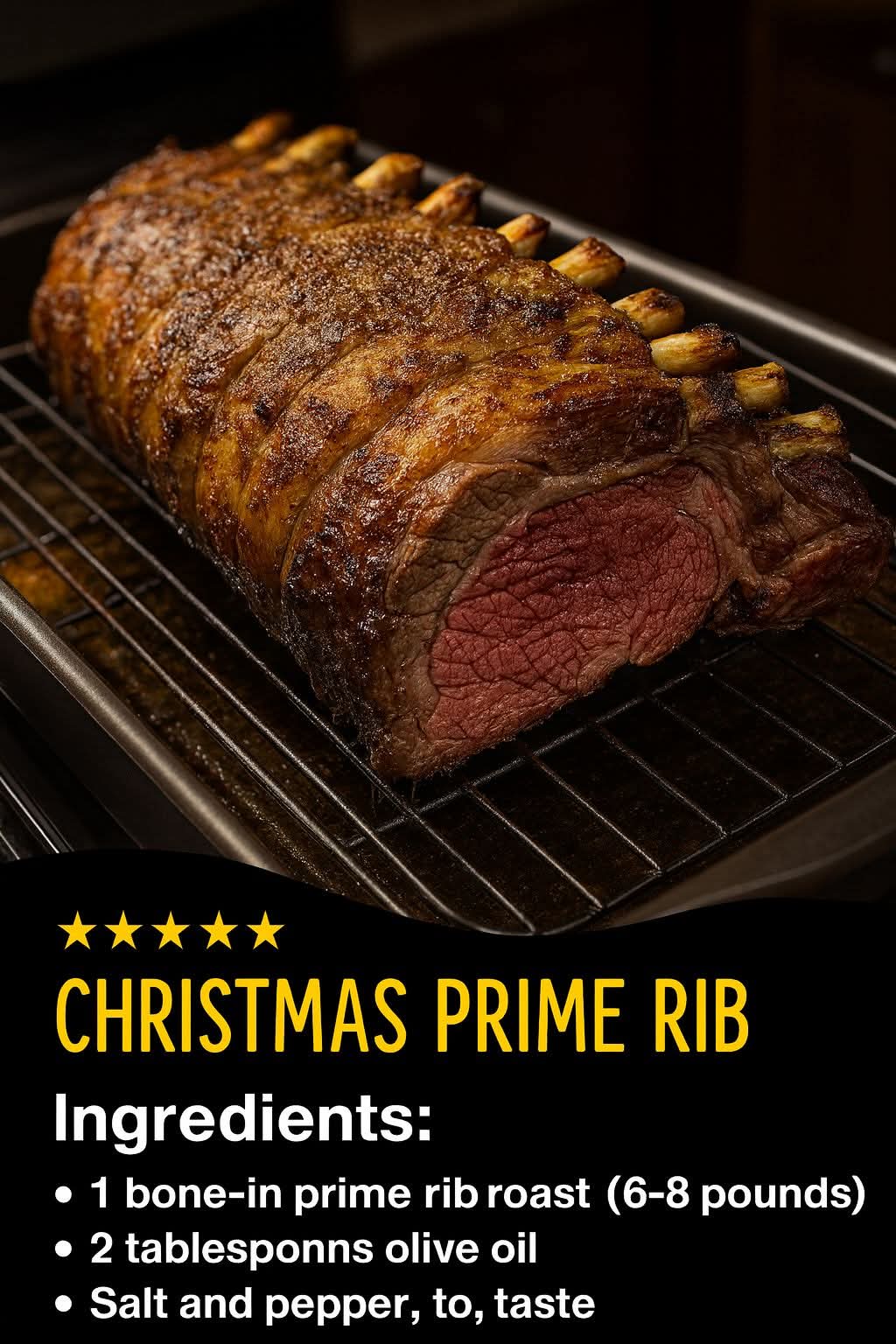
The Absolute Best Christmas Prime Rib
Juicy, Flavorful, and Foolproof Every Single Time
When it comes to holiday meals, few dishes command attention like a perfectly cooked prime rib. It’s the centerpiece that makes guests pause mid-conversation, the dish that turns a Christmas dinner into a true celebration. Rich, buttery, and incredibly tender, a well-prepared standing rib roast is more than just a meal—it’s an experience.
This recipe is designed to remove all the fear and guesswork that often comes with cooking prime rib. No complicated steps, no constant temperature adjustments, and no stress. Just a deeply flavorful roast with a beautifully seasoned crust and a rosy, juicy center that slices like butter.
If you’ve ever been nervous about cooking prime rib, this is the recipe that will change everything. It’s reliable, forgiving, and consistently delivers restaurant-quality results at home. Whether you’re feeding a small family or hosting a large holiday gathering, this Christmas Prime Rib will be the dish everyone remembers—and requests again next year.
Why Prime Rib Is the Ultimate Holiday Roast
Prime rib has earned its place as a holiday classic for good reason. Cut from the rib section of the beef, it’s naturally tender, richly marbled, and incredibly flavorful. The bones not only add visual drama but also help insulate the meat as it cooks, contributing to a juicier final result.
Unlike many holiday dishes that require hours of active prep, prime rib is surprisingly simple once you understand the process. With the right seasoning, proper temperature control, and a bit of patience, the oven does most of the work for you.
This recipe focuses on:
- Deep beef flavor
- A crisp, savory crust
- A perfectly cooked interior
- Minimal hands-on time
- Maximum impact on the table
Choosing the Right Prime Rib
Bone-In vs. Boneless
For Christmas dinner, a bone-in prime rib is highly recommended. The bones add flavor, help the roast cook evenly, and create a dramatic presentation. A 6–8 pound roast with 3–4 bones is ideal for most holiday gatherings.
Size and Servings
A general rule is to plan for about 1 pound per person with a bone-in roast. This accounts for the bones and ensures generous portions.
- 6-pound roast: serves 6–8
- 8-pound roast: serves 8–10
Leftovers are never a bad thing when it comes to prime rib.
Grade of Beef
If possible, choose USDA Prime or Choice. Prime offers the most marbling and tenderness, but Choice is still excellent and more widely available. Avoid Select if you can, as it tends to be leaner and less forgiving.
Ingredients
Prime Rib Roast
- 1 bone-in prime rib roast (6–8 pounds, 3–4 bones)
Seasoning Blend
- 2 tablespoons kosher salt
- 1 tablespoon freshly ground black pepper
- 2 tablespoons garlic powder
- 1 tablespoon onion powder
- 2 tablespoons fresh rosemary, finely chopped
- 2 tablespoons fresh thyme, finely chopped
Additional Ingredients
- 1/4 cup olive oil or melted butter
- 1 whole head garlic, halved crosswise
- Optional: beef broth for the pan
These ingredients work together to enhance the natural flavor of the beef without overpowering it.
Preparing the Prime Rib
Step 1: Bring the Roast to Room Temperature
Remove the prime rib from the refrigerator at least 2–3 hours before cooking. This step is critical. Allowing the roast to come to room temperature ensures even cooking from edge to center.
Place the roast on a rack set inside a roasting pan, bone-side down.
Step 2: Season Generously
In a small bowl, combine salt, pepper, garlic powder, onion powder, rosemary, and thyme.
Rub the roast all over with olive oil or melted butter. This helps the seasoning adhere and promotes browning.
Coat the entire roast generously with the seasoning mixture, pressing it into the surface. Don’t forget the ends and sides.
Step 3: Optional Dry Brining
For even deeper flavor, you can season the roast the day before and refrigerate it uncovered overnight. This dries the surface slightly and enhances crust formation. If you choose this method, remove the roast from the refrigerator several hours before cooking.
Foolproof Cooking Method
This method produces a perfect crust and evenly cooked interior without constant monitoring.
Step 1: High-Heat Start
Preheat your oven to 500°F.
Place the seasoned prime rib in the oven and roast for 15 minutes. This initial blast of heat creates a deep, flavorful crust.
Step 2: Reduce Heat and Roast Low and Slow
After 15 minutes, reduce the oven temperature to 325°F. Do not remove the roast from the oven.
Continue roasting until the internal temperature reaches:
- 120–125°F for rare
- 130–135°F for medium-rare
- 140°F for medium
Use a meat thermometer inserted into the thickest part of the roast, avoiding the bone.
Expect approximately 15–17 minutes per pound at 325°F, but always rely on temperature rather than time.
Step 3: Rest the Roast
Once the desired temperature is reached, remove the prime rib from the oven and tent loosely with foil.
Let it rest for at least 20–30 minutes. During this time, the internal temperature will rise slightly, and the juices will redistribute throughout the meat.
Skipping this step is the fastest way to lose juiciness.
Carving the Prime Rib
To carve:
- Remove the bones by slicing along the bone line.
- Cut the roast into thick or thin slices, depending on preference.
- Serve immediately.
The meat should be tender, juicy, and evenly pink from edge to edge.
Making an Easy Pan Jus (Optional)
While the roast rests, place the roasting pan on the stovetop over medium heat. Add a splash of beef broth and scrape up the browned bits from the bottom of the pan.
Simmer briefly, strain if desired, and serve alongside the prime rib for extra flavor.
Serving Suggestions
Prime rib pairs beautifully with classic holiday sides.
Popular choices include:
- Garlic mashed potatoes
- Creamed spinach
- Roasted Brussels sprouts
- Yorkshire pudding
- Green bean casserole
- Horseradish sauce or au jus
Keep sides simple to let the prime rib shine.
Storage and Leftovers
Refrigeration
Store leftover prime rib in an airtight container for up to 4 days.
Reheating
Reheat gently in a low oven or enjoy cold in sandwiches. Avoid microwaving, as it can dry out the meat.
Leftover prime rib is excellent in:
- French dip sandwiches
- Steak and eggs
- Beef stroganoff
- Hash with potatoes and onions
Common Mistakes to Avoid
- Cooking straight from the refrigerator
- Under-seasoning the roast
- Overcooking due to fear
- Skipping the resting period
- Relying on time instead of temperature
Avoiding these mistakes guarantees success.
Why This Recipe Is Truly Foolproof
This method works because it respects the meat. High heat creates flavor, low heat ensures even cooking, and resting locks in moisture. There are no complicated techniques—just proven fundamentals.
It’s the kind of recipe that builds confidence. Once you make it, you’ll realize prime rib doesn’t need to be intimidating.
A Holiday Table Showstopper
This Christmas Prime Rib isn’t just dinner—it’s the moment everyone remembers. The aroma fills the house, the carving draws a crowd, and the first bite confirms that all the anticipation was worth it.
If you’re looking for a holiday centerpiece that delivers elegance without stress, this is it.
Save this recipe. Share it. Make it part of your Christmas tradition.
And when everyone asks how you made it so perfect, you’ll know exactly what to say.