
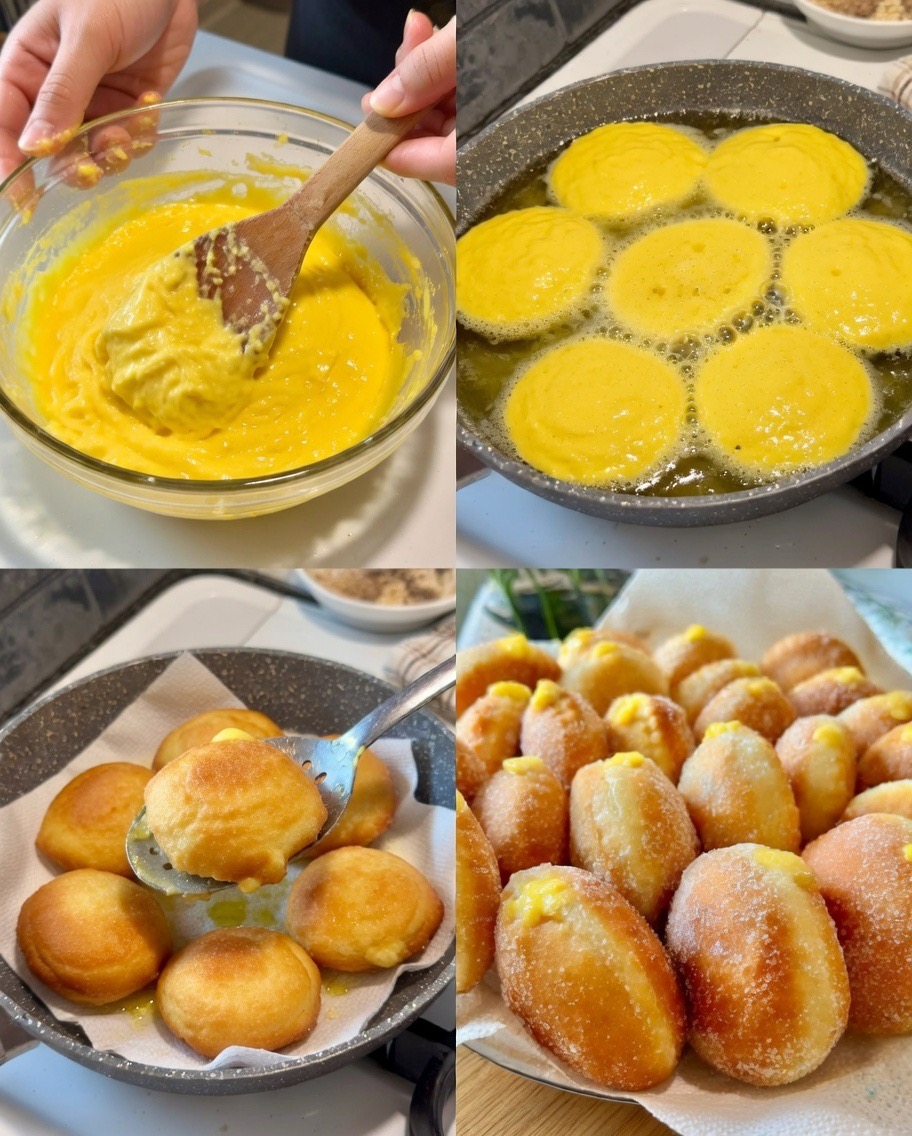
Introduction
Few desserts are as universally loved as freshly fried doughnuts. Their golden exterior, soft pillowy interior, and sweet flavor make them irresistible. Among the many varieties of doughnuts enjoyed around the world, custard-filled doughnuts stand out as one of the most indulgent and satisfying treats. The combination of warm, fluffy dough and silky smooth custard creates a dessert that feels both comforting and luxurious.
Custard-filled doughnuts are commonly found in bakeries, cafés, and pastry shops, where they are often displayed in tempting rows coated in sugar or glazed to perfection. While they may look like a complex bakery creation, they can actually be made quite easily at home with simple ingredients and a little patience.
Making doughnuts from scratch allows you to control the ingredients and enjoy the incredible aroma of freshly fried pastries filling your kitchen. The dough rises slowly to create a light and airy texture, and the custard filling adds a creamy center that perfectly balances the sweetness of the dough.
This recipe will guide you through each step of creating homemade custard-filled doughnuts, from preparing the soft yeast dough to making a rich vanilla custard filling and finally frying and filling the doughnuts. With the right technique and a few helpful tips, you can achieve bakery-quality results in your own kitchen.
These doughnuts are perfect for weekend breakfasts, family gatherings, holidays, or whenever you want to create a special homemade dessert that everyone will love.
Ingredients
For the Dough
2 cups all-purpose flour
2 tablespoons granulated sugar
1 teaspoon instant yeast
½ teaspoon salt
1 large egg
¾ cup warm milk
2 tablespoons melted butter
For Frying
Vegetable oil (enough for deep frying)
For the Custard Filling
2 cups milk
3 egg yolks
½ cup sugar
3 tablespoons cornstarch
1 teaspoon vanilla extract
1 tablespoon butter
For the Coating
½ cup granulated sugar
Kitchen Tools You Will Need
Preparing doughnuts becomes much easier when you have the right tools available. While professional bakeries use specialized equipment, the following common kitchen tools will work perfectly for homemade doughnuts.
Mixing bowls
Whisk
Wooden spoon or spatula
Rolling pin
Round cutter or drinking glass
Deep frying pan or heavy pot
Slotted spoon
Paper towels
Piping bag or plastic bag with the tip cut off
These basic tools are usually enough to produce excellent doughnuts at home.
Step 1: Preparing the Dough
Start by preparing the yeast dough that will form the base of your doughnuts. In a large mixing bowl, combine the flour, sugar, instant yeast, and salt. Mix the dry ingredients well so that the yeast and salt are evenly distributed.
Next, add the egg, warm milk, and melted butter. The milk should be warm but not hot, ideally around body temperature. If the milk is too hot it may kill the yeast, preventing the dough from rising properly.
Mix the ingredients together using a wooden spoon until a soft dough begins to form. Once the dough comes together, transfer it onto a lightly floured surface and knead it for about 8 to 10 minutes.
Kneading develops the gluten in the flour, which gives the doughnuts their soft and elastic structure. The dough should become smooth, slightly elastic, and no longer sticky by the time kneading is complete.
Place the dough back into a lightly greased bowl and cover it with a clean kitchen towel or plastic wrap. Allow it to rise in a warm place for approximately one hour, or until the dough has doubled in size.
Step 2: Shaping the Doughnuts
Once the dough has doubled in size, gently press it down to release excess air. This process is known as punching down the dough and helps create an even texture.
Transfer the dough onto a lightly floured surface and roll it out to about half an inch thick. Using a round cutter, cookie cutter, or even the rim of a drinking glass, cut the dough into small circles.
Place the dough circles onto a tray lined with parchment paper, leaving a little space between each piece.
Cover them loosely with a towel and allow them to rest for another 20 minutes. This second rise, known as proofing, helps make the doughnuts even lighter and fluffier once fried.
Step 3: Frying the Doughnuts
Pour vegetable oil into a deep frying pan or heavy pot, filling it about two inches deep. Heat the oil over medium heat until it reaches approximately 170–180°C (340–355°F).
If you do not have a thermometer, you can test the oil by dropping a small piece of dough into it. If the dough begins to bubble and rise to the surface gradually, the oil is ready.
Carefully place a few dough circles into the hot oil, being careful not to overcrowd the pan. Fry the doughnuts for about 2 to 3 minutes on each side until they turn golden brown.
Use a slotted spoon to remove the doughnuts from the oil and place them on a plate lined with paper towels to absorb excess oil.
While the doughnuts are still warm, roll them gently in granulated sugar to create a sweet outer coating.
Step 4: Preparing the Custard Filling
The custard filling is what makes these doughnuts truly special. In a saucepan, heat the milk over medium heat until it becomes warm but not boiling.
In a separate bowl, whisk together the egg yolks, sugar, and cornstarch until the mixture becomes smooth and pale in color.
Slowly pour the warm milk into the egg mixture while whisking continuously. This step is important because it gradually raises the temperature of the eggs without scrambling them.
Once fully combined, pour the mixture back into the saucepan and cook over medium heat. Stir constantly with a whisk or spatula until the custard thickens into a smooth, creamy texture.
Remove the saucepan from the heat and stir in the vanilla extract and butter. Continue stirring until the butter melts completely.
Allow the custard to cool to room temperature before using it to fill the doughnuts.
Step 5: Filling the Doughnuts
Once the doughnuts and custard have cooled, it is time to assemble the final dessert.
Transfer the custard into a piping bag fitted with a small round tip. If you do not have a piping bag, a simple plastic bag with a small corner cut off works well.
Using a small knife or skewer, make a small hole in the side of each doughnut.
Insert the piping tip into the hole and gently squeeze the custard into the center of the doughnut until it feels slightly heavy and filled.
Repeat this process for each doughnut until all are filled with creamy custard.
Tips for Perfect Doughnuts
Use fresh yeast to ensure the dough rises properly.
Maintain a consistent oil temperature during frying. Oil that is too hot can burn the outside before the inside cooks.
Avoid overcrowding the frying pan, as this can lower the oil temperature.
Allow the custard to cool completely before filling the doughnuts.
Roll the doughnuts in sugar while they are still warm so the sugar sticks well.
Flavor Variations
One of the best things about homemade doughnuts is the ability to experiment with different flavors and fillings.
Chocolate Custard
Add two tablespoons of cocoa powder to the custard mixture to create a rich chocolate filling.
Fruit Jam Filling
Replace the custard with strawberry, raspberry, or apricot jam for a fruity twist.
Cinnamon Sugar Coating
Mix ground cinnamon with sugar for a warm and aromatic coating.
Chocolate Glaze
Instead of sugar, dip the doughnuts in melted chocolate for a glossy bakery-style finish.
Serving Suggestions
Custard-filled doughnuts are best served fresh while still soft and fluffy. They pair wonderfully with coffee, tea, or hot chocolate.
For a more decorative presentation, you can dust the doughnuts with powdered sugar or drizzle them with melted chocolate.
They are perfect for brunch tables, dessert platters, and celebrations.
Storage Tips
Although doughnuts are best enjoyed fresh, they can be stored for later.
Keep them in an airtight container at room temperature for up to one day.
If stored in the refrigerator, they will keep for up to three days. Warm them briefly in the microwave to restore their softness before serving.
Conclusion
Homemade custard-filled doughnuts are a delightful treat that combines soft, airy dough with a rich and creamy filling. While they may appear like a bakery specialty, making them at home is both rewarding and surprisingly simple.
By following the steps in this recipe, you can create golden, sugar-coated doughnuts filled with smooth vanilla custard that rival those found in professional bakeries. The process of kneading, shaping, frying, and filling the doughnuts allows you to experience the joy of traditional pastry making while creating a dessert that everyone will appreciate.
Whether served for breakfast, dessert, or a special occasion, these doughnuts bring warmth, sweetness, and a homemade touch that makes them truly unforgettable.