
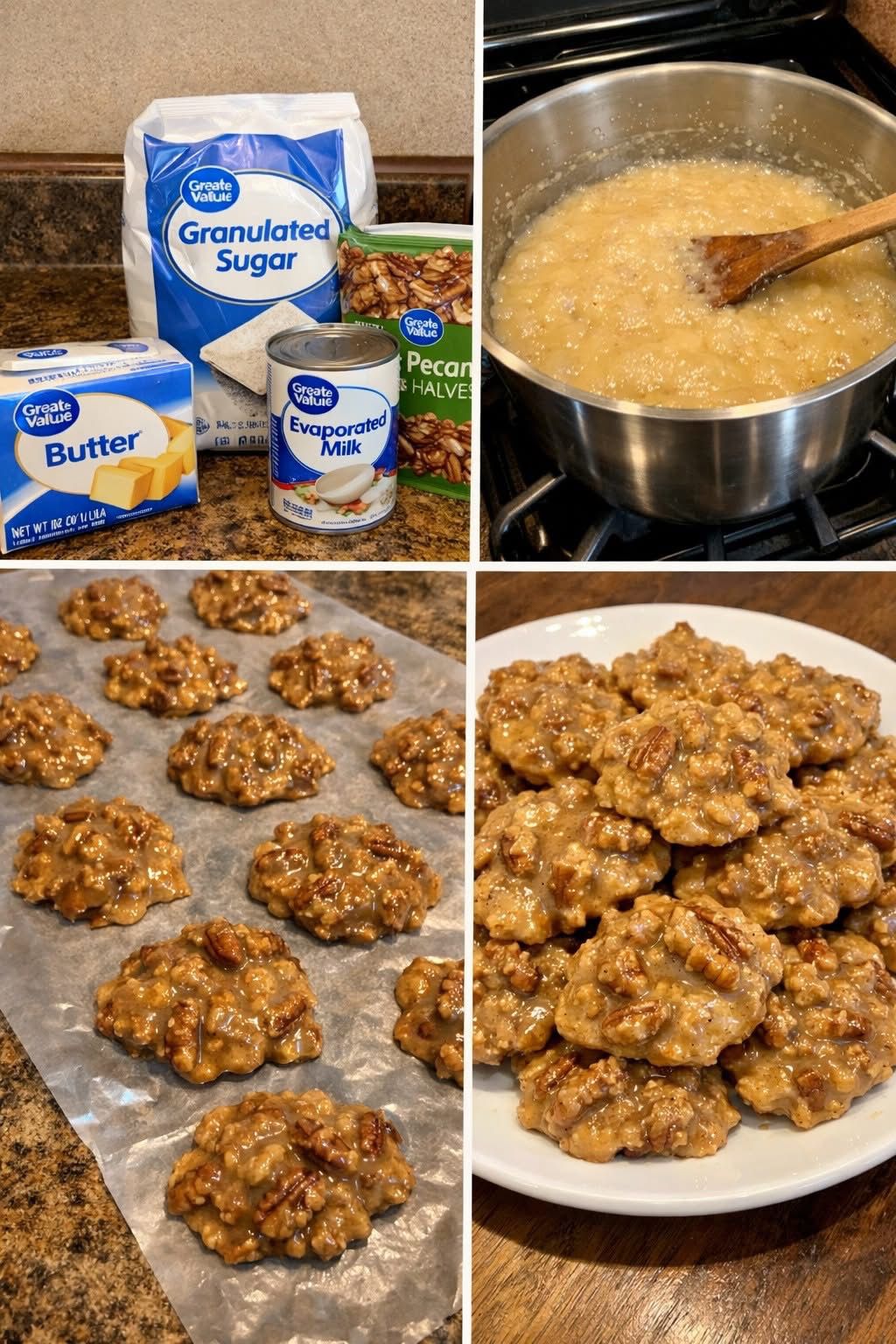
Classic Homemade Pecan Pralines
Pecan pralines are a timeless Southern confection, beloved for their rich caramel flavor, buttery sweetness, and generous crunch of toasted pecans. With roots tracing back to French culinary traditions and deep ties to Southern kitchens, pralines have become a symbol of comfort, tradition, and homemade indulgence. This classic pecan pralines recipe delivers that authentic, old-fashioned taste with a soft-yet-slightly-grainy texture that melts in your mouth while still offering plenty of nutty bite.
What makes pecan pralines so special is their simplicity. Using just a handful of pantry staples—butter, sugar, evaporated milk, and pecans—you can create a candy that feels luxurious and nostalgic all at once. There is something almost magical about transforming these basic ingredients into a glossy, bubbling caramel that sets into creamy, irresistible candies.
This recipe is written to guide you step by step through the praline-making process, including important candy-making tips that help ensure success. Whether you are making pralines for the first time or continuing a family tradition passed down through generations, this guide will help you create perfect pecan pralines every time.
A Brief History of Pecan Pralines
Pralines originated in France in the 17th century, where they were made with almonds coated in caramelized sugar. When French settlers brought the concept to Louisiana, the recipe evolved using local ingredients—most notably pecans and dairy. Over time, the Louisiana-style praline became creamier and softer than its European ancestor, thanks to the addition of milk or cream.
Today, pecan pralines are especially associated with Southern states such as Louisiana and Texas, where they are sold in candy shops, made at home during holidays, and gifted to friends and family. Each cook may have their own slight variation, but the heart of the recipe remains the same: sugar cooked to the soft-ball stage, enriched with butter and milk, and finished with plenty of pecans.
Why This Recipe Works
This classic pecan pralines recipe uses evaporated milk instead of heavy cream, which gives the candy a rich yet stable structure. The sugar cooks slowly to the soft-ball stage, allowing it to develop flavor without burning. Butter adds smoothness and depth, while pecans bring warmth, texture, and a toasty finish.
Cooking the mixture over medium heat rather than high heat is crucial. Candy making is as much about patience as it is about precision. Gentle heat allows the sugar to dissolve evenly and prevents scorching, which can ruin the entire batch.
Stirring at the right moments—occasionally at first, then continuously as the mixture thickens—helps create that signature praline texture that is creamy rather than gritty.
Ingredients Overview
Butter: Four ounces of butter provide richness and help prevent the sugar from crystallizing too quickly. Unsalted butter is preferred, but salted butter can be used for a slightly sweet-salty contrast.
White Sugar: Four cups of white granulated sugar form the base of the candy. Sugar is responsible for both sweetness and structure, making accurate measurement essential.
Evaporated Milk: One 12-ounce can of evaporated milk adds creaminess without the extra fat of heavy cream. Its concentrated milk solids help create the classic praline texture.
Pecans: Two cups of pecans add crunch and nutty flavor. Fresh, high-quality pecans make a noticeable difference in taste.
Choosing and Preparing Pecans
Pecans are the star of this recipe, so choosing good-quality nuts is important. Look for pecans that are fresh, fragrant, and free from bitterness. If possible, lightly toast the pecans before adding them to the candy mixture. Toasting enhances their natural oils and deepens their flavor.
To toast pecans, spread them in a single layer on a baking sheet and bake at 350°F (175°C) for 5 to 8 minutes, stirring once. Allow them to cool completely before using.
Pecans can be used whole, halved, or roughly chopped depending on your preference. Larger pieces create a more rustic praline, while chopped pecans distribute more evenly throughout the candy.
Understanding the Soft-Ball Stage
Reaching the soft-ball stage is one of the most important steps in making pecan pralines. This stage occurs when the sugar syrup reaches approximately 235°F to 240°F (113°C to 116°C).
If you have a candy thermometer, attach it to the side of the pot, making sure it does not touch the bottom. This provides the most accurate reading.
If you do not have a thermometer, you can test the soft-ball stage using cold water. Drop a small amount of the hot syrup into a bowl of cold water. If it forms a soft, pliable ball that flattens when removed, the mixture has reached the correct stage.
Cooking beyond this point can result in hard, brittle pralines, while stopping too early can cause the candies to remain runny.
Step-by-Step Cooking Instructions
Begin by placing a heavy 5-quart pot on the stove over medium heat. A heavy-bottomed pot is essential for even heat distribution and preventing scorching.
Add the butter, white sugar, and evaporated milk to the pot. Stir gently until the butter melts and the ingredients begin to combine.
Continue cooking over medium heat, stirring occasionally, until the mixture comes to a full boil. Once boiling, reduce stirring briefly and allow the mixture to cook while maintaining a steady boil.
As the mixture thickens and approaches the soft-ball stage, begin stirring continuously. This helps prevent burning and ensures even cooking.
Once the soft-ball stage is reached, remove the pot from the heat immediately.
Cooling and Beating the Mixture
After removing the pot from heat, allow the mixture to cool slightly while stirring. As it cools, the glossy appearance will begin to fade, and the mixture will thicken.
This step is critical for achieving the correct texture. Stirring while cooling encourages controlled crystallization, which gives pralines their creamy, slightly grainy consistency.
When the mixture loses its shine and becomes noticeably thicker, add the pecans. Stir until the pecans are evenly distributed and the mixture begins to set.
Shaping the Pralines
Prepare a work surface by lining it with foil or waxed paper. Using a spoon or small scoop, drop spoonfuls of the praline mixture onto the prepared surface.
Work quickly, as the mixture will continue to thicken as it cools. Each spoonful will spread slightly and then set into a soft mound.
Allow the pralines to cool completely at room temperature before handling.
Storage and Shelf Life
Once fully set, pecan pralines can be stored in an airtight container at room temperature for up to one week. Separate layers with waxed paper to prevent sticking.
Avoid storing pralines in the refrigerator, as moisture can affect their texture. If you live in a very humid climate, keep them in a cool, dry place.
Troubleshooting Common Issues
If the pralines are too soft, the mixture may not have reached the soft-ball stage. If they are too hard or crumbly, the sugar may have cooked too long.
Grainy pralines can result from over-stirring too early or cooking at too high a temperature. Gentle heat and patience are key.
Variations and Flavor Additions
For a vanilla twist, add one teaspoon of vanilla extract just before adding the pecans. A pinch of cinnamon or nutmeg can add warmth and depth.
Chocolate lovers can drizzle melted chocolate over cooled pralines for an extra indulgent treat.
Final Thoughts
Classic pecan pralines are more than just candy—they are a piece of culinary heritage. With their rich caramel flavor, buttery texture, and crunchy pecans, they capture the essence of Southern comfort in every bite.
This recipe is perfect for holidays, gift-giving, or simply treating yourself to something special. Once you master the technique, you will find that making pralines at home is not only rewarding but deeply satisfying.
With patience, attention, and quality ingredients, you can create pecan pralines that rival those from the finest candy shops and become a cherished recipe in your own kitchen.